fbpx


Identify Asymmetries Before They Cause A Running Injury!

Why is now the time identify asymmetries before they cause a running injury?  Does one side of your body consistently hurt more than the other?  You may be suffering from asymmetries that have gone undetected. 
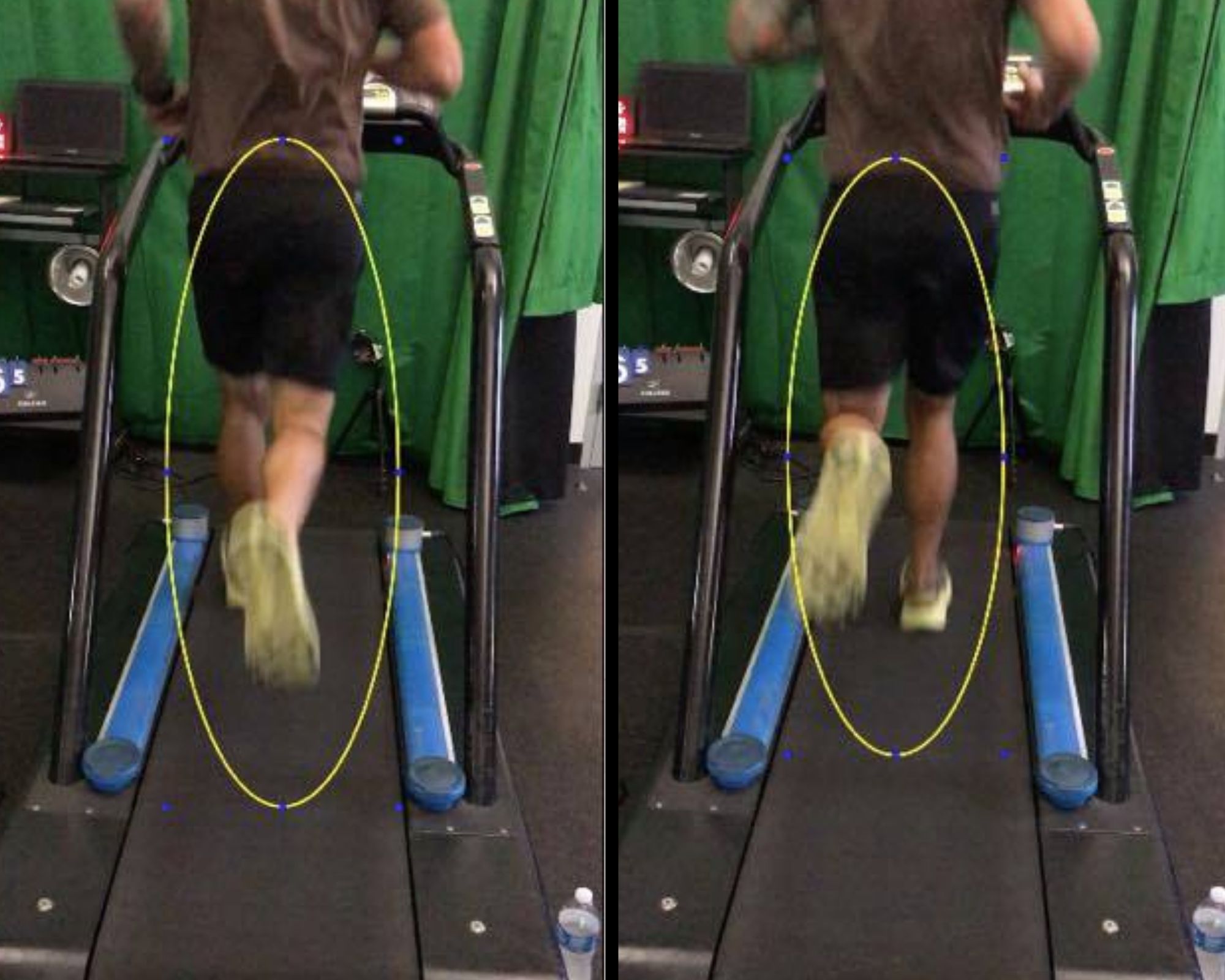
Identify asymmetries before they cause an injury in this runner from behind.
Are you able to spot the asymmetries in this runner from behind?

Although asymmetries naturally develop over time due to varying strengths, limiters, injuries, and flexibility variances, it is important to address any underlying biomechanical problems to avoid endlessly chasing injuries. The site of pain may not be the root cause of the problem.  It is important to dig a little deeper, and sometimes even look to the opposite limb to identify the issue. 

Let’s take a look at Stan. When Stan was in high school, he sprained his ankle playing soccer. It was a mild sprain, so his athletic trainer recommended he take a few weeks off of working out or running. His trainer did not consider rehab, since this was a rather garden variety injury that just needed rest. Stan spent a few weeks watching movies and staying off his injured ankle as much as possible.

As Stan began running again a few weeks later, his gait mechanics had changed slightly to compensate for the injured ankle. His lack of ankle stability caused an inhibited gluteal muscle and decrease in core activation on the weaker side side. Slowly, one leg began moving differently to offload to the stronger muscle groups that were not coming off of an injury. He began flaring out one arm to stabilize his body against the unstable ankle. Over time, this new gait became his new normal. A year later, when he injured his left knee, his body went through a very similar process and built an entirely new gait adaptation layered on top of the old one.

But the time he made it into our clinic it took 3 months of diligent rehab to unravel these patterns and clean up the inefficient movement patterns. These new patterns were now leading him down the road to an additional hip injury, simply due to all of the off-loading behaviors his body had been developing from old injuries.

It is extremely common for runners to have non-functional (anatomical) asymmetries. Slight differences between left and right in bony anatomy are normal, though they can still cause problems. Maybe one tibia is internally rotated more than the left, or one leg is slightly longer than the other. It is important to avoid one leg working harder than the other to the point of break down, and thus causing injury, even due to anatomic variances.

While anatomic variance is normal, it is important to understand where your specific limiters are so that they can be accounted for in training. Usain Bolt, one of the fastest men alive, suffers from scoliosis and an asymmetrical running gait

What can you do to better understand your body’s unique makeup and identify asymmetries before they cause a running injury?

Test for asymmetry by performing your regular routine, alongside the various exercises discussed in our previous blogs. While performing any movement, be aware of the differences between left and right. Start with balancing on one leg. Are you rock solid on your right leg yet you fall over on your left? How about a lunge? Does one hip feel tighter than the other? Now try going for a long run, does one leg seem to fatigue faster than the other? Continue to challenge your body in various ways and pay attention to your strengths and limiters so you can work through the weak areas in the gym before they become sidelining injuries on the run!

Thank you for taking the time to read our RunLab™ Blog! We hope that you use this information to run more injury free and to optimize your running performance. 

For more information about the RunLab™ team and to get your running stride analyzed by one of the preeminent gait specialist teams in the country, please visit WWW.RUNLABAUSTIN.COM

Outside of the Austin area? You can still have your running stride analyzed by one of the best teams in the country. Just visit WWW.RUNLAB.US to see where our partner filming locations are based or choose the self-film option. 

RunLab™.  Helping runners help themselves.

LEARN MORE:
RunLab™ Podcast RUN.
RunLab™ YouTube channel
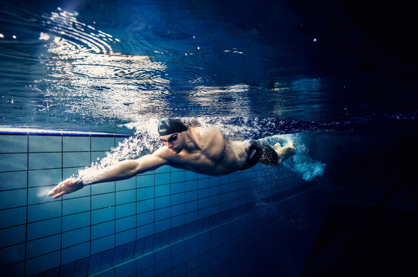
How to Safely Build Endurance as a Runner

Ever wonder how to safely build endurance as a runner?  If you have been following our blog series, you have been establishing adequate range of motion and mobility. Your balance and stability are now ninja-like…or at least ninja-in-training-like.  Now, it’s time to focus on endurance so you can crush your next running goal and continue to improve your running performance.  This post is an introduction to endurance and how to safely build endurance as a runner by incorporating non-running exercise into your weekly routine.

As mentioned in previous posts, running is a high-impact exercise. Trading a few running sessions out for low-impact exercises can increase your endurance fitness without adding additional load to your muscles and joints.

What exactly are we talking about when we say “endurance”?

There are two main types of endurance we will focus on to safely build endurance as a runner, cardiovascular and muscular. Cardiovascular endurance means how well our hearts, lungs, arteries, and veins take in, transport, and utilize oxygen. Muscular endurance is related to how many contractions our muscles can perform before they begin to fatigue.

How can you impact your cardiovascular endurance?

By varying intensity levels in each of these cardio exercises, you can start to increase the ability of your heart to have more cardiac output (heart rate x stroke volume). Improving the ability to get oxygenated blood through your body allows your muscles to continue to work at a higher rate. When you first start exercising, your ability to clear out carbon dioxide, shuttle hydrogen ions, and utilize oxygen is not great so your legs start to get “heavy” and fatigue quickly. As you gain cardiovascular fitness, you are better able to clear out that pesky carbon dioxide, shuttle hydrogen ions so they don’t build up in your muscles, and utilize oxygen so you can continue the activity for sustained periods over your previous capacity. If you are interested in learning more about how to create a running program based off of intensity levels, check out Jack Daniels’ “Running Formula”.

Remember, improving cardiovascular endurance means you need to perform exercises that stress the heart. Cardio exercises include things such as running, hiking, cycling, and swimming. Performing these exercises at varying and increasing intensity levels will improve your hearts cardiac output and your heart will become more efficient at pumping oxygenated blood throughout your body. The faster you transport oxygen to your muscles, the better they will feel and perform. Try adding a long bike ride or a swim, or even dancing (try Lindyhop!) into your weekly training plan. You will improve your endurance while challenging your body in a new way, which ultimately helps improve your run.

build muscular endurance as a runner
Click here for swimming workouts to help build endurance and improve your running.

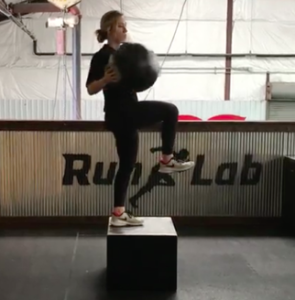
Now let’s focus on muscular endurance. Running is essentially a series of single leg hops that you perform over, and over, and over again. In order to get through any distance run, it is vital that your leg muscles have the endurance to continue to contract and relax with each step. In addition to propelling you forward, muscle contractions help the venous system return blood to your heart. The more efficient your muscles are at contracting against the veins to return blood to the heart, the better cardiac output you will have and thus, better endurance. Exercises to improve muscular endurance for running include body weight squats, lunges and pistol squats.  Try these pistol squat progressions.

Remember, you will only stick with any exercise program long-term if it’s enjoyable for you! Choose activities that you WANT to spend time doing. Almost any sport can be turned into an endurance workout if done for sustained periods. Rock-climbing, Rollerblading, playing the drums…the list is endless. Be creative and both your run AND your brain will thank you for it.


Thank you for taking the time to read our RunLab™ Blog! We hope that you use this information to run more injury free and to optimize your running performance.

For more information about the RunLab™ team and to get your running stride analyzed by one of the preeminent gait specialist teams in the country, please visit WWW.RUNLABAUSTIN.COM

Outside of the Austin area? You can still have your running stride analyzed by one of the best teams in the country. Just visit WWW.RUNLAB.US to see where our partner filming locations are based or choose the self-film option.

RunLab™. Helping runners help themselves.

LEARN MORE:
RunLab™ Podcast RUN.
RunLab™ YouTube channel


The Key to a Good Race Photo? Coordination.

(Photo Credit)

The Key to a Good Race Photo? Coordination. Have you ever looked at your race photos and thought to yourself, “WOW. How did I even finish my race? My body seems to be moving in every direction except forward!”  Make your next set of race photos look more graceful by improving your coordination.

When most people hear the word coordination they think of “hand-eye coordination.” These individuals are not wrong. However, when we speak of coordination in the context of running we mean being able to orchestrate the muscles, joints, tendons, and skeleton to execute the desired movement. We develop coordination through challenging our proprioception, kinesthetic awareness, and nervous system.

The Key to a Good Race Photo? Coordination.
(Proprioception)

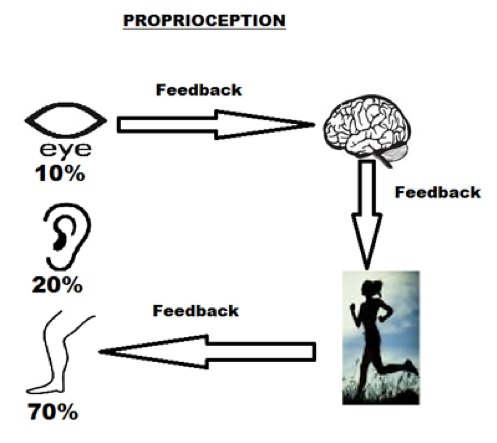
Proprioception is the mechanism that allows us to know where our body is in space. For example, if you were in a pitch-black room, you would still know where your hands were without having to look at them. Kinesthetic awareness is similar to proprioception but allows us to sense body movements. These mechanisms work by transferring information from our muscles and joints to our brain.

Most individuals have underdeveloped proprioception and kinesthetic awareness and are over-reliant on their visual system to activate their muscles. To test this, balance barefoot on one leg with your eyes open for 30 seconds. Now try the same thing with your eyes closed.  If you fell over as soon as you closed your eyes, you are over-reliant on your visual system and lack proprioceptive awareness from your muscles and joints. If your muscles and joints aren’t sending appropriate data to your brain, it makes it extremely challenging for your brain to coordinate efficient movements. Lack of efficiency implies that the wrong muscles will be recruited during a movement which will lead to a lack of stability and power. All of these things combined can lead to a higher probability of being injured while running.

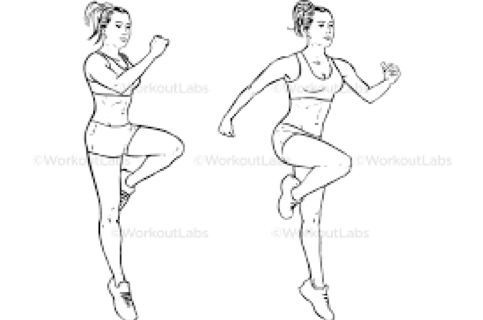
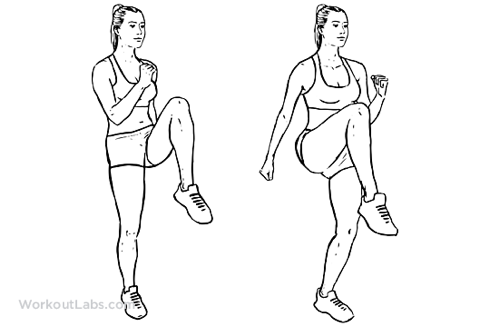
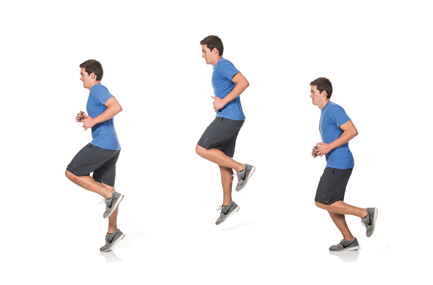
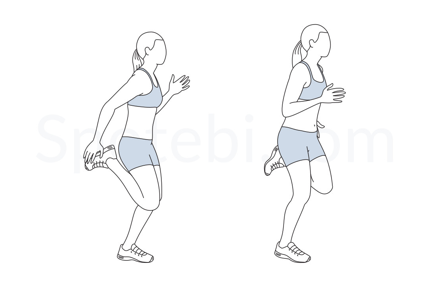
In addition to building proprioception and kinesthetic awareness, you can improve coordination by developing neural pathways. The brain and spinal cord make up the central nervous system. Nerves that enter and exit the spinal cord run to every muscle in your body making up the peripheral nervous system. You can improve these pathways from your brain to your muscles by movement repetition or muscle memory.  The more you perform a movement, the stronger and faster the communication from your brain to your muscles will be. Running is a high impact exercise. In order to improve the neural pathways without the increased loading rate of running, perform parts of the running motion in less impactful ways. For example, perform three rounds of butt kicks, skips, and high knees for 15 to 30 seconds each, three to five days a week. These exercises look very similar to running without the same loading rate. Meaning, you can improve your pathways for running and enhance your coordination with less strain on the body. 

The Key to a Good Race Photo? Coordination. Butt Kicks.
View example of butt kicks


The Key to a Good Race Photo? Coordination. Power Skips.
View example of power skips


The Key to a Good Race Photo? Coordination. High Knees.
View example of high knees


Thank you for taking the time to read our RunLab™ Blog! We hope that you use this information to run more injury free and to optimize your running performance.

For more information about the RunLab™ team and to get your running stride analyzed by one of the preeminent gait specialist teams in the country, please visit WWW.RUNLABAUSTIN.COM

Outside of the Austin area? You can still have your running stride analyzed by one of the best teams in the country. Just visit WWW.RUNLAB.US to see where our partner filming locations are based or choose the self-film option.

RunLab™. Helping runners help themselves.

ABOUT LORIN WILSON

RunLab™ Clinical Gait Specialist

Lucky enough to be a part of a great running program in high school, Lorin not only went on to win the 2007 Texas 4a State Championship in the mile but also went on to earn a track scholarship to the University of Texas at Austin. Lorin graduated from the The University of Texas at Austin with a major in Exercise Science and a minor in business. While still attending UT, he began coaching distance running at St. Stephen’s Episcopal school where he would coach student-athletes to break school records in the 400 meter, 800 meter, 1600 meter, 3200 meter, 5000 meter, 4×400 meters, and 4×800 meters. After graduating from UT and during his aforementioned tenure at St. Stephen’s, Lorin also worked for the local Austin non-profit Power For Parkinson’s as a fitness instructor, which provides free fitness programs for individuals with Parkinson’s disease. No longer a trainer at Power For Parkinson’s, Lorin does fundraising campaigns for Power For Parkinson’s. During this period he also started BlueSky Running LLC, which provided on-site Yoga programs for employees of the Austin Independent School District (teachers, administration, bus drivers etc).

Lorin has the following physical training certifications: National Academy of Sports Medicine (NASM) Certified Personal Trainer, Performance Enhancement Specialist (NASM), Corrective Exercise Specialist (NASM), Senior (elderly individuals) Fitness Specialist (NASM), Fitness Nutrition Specialist (NASM), RunLab Clinical Gait Specialist, USA Track & Field Level 1 Coach, and a USA Yoga Alliance 200 Hour Certified Yoga Instructor certification earned while studying in Rishikesh, India. Lorin is a MBA Graduate with an emphasis in Accounting from Texas State University. He was also the President of the Texas State MBA Student Association and a Future Texas Business Hall of Fame Scholarship Recipient.

Lorin has a marathon best of 2:37:05 (5:59 per mile pace) run at the 2011 Los Angeles Marathon. He ran his first 100 miler in 17 hours 30 minutes (10:15 per mile pace) in Flagstaff, Arizona in September 2018. He ran the 2019 Boston Marathon in 2:37:59. He also has three top 10 finishes (5th, 7th, and 10th) in the Capital 10,000, the largest 10k in Texas, with the latest two being 2016 and 2017. Lorin looks forward to working towards his goal of making high-quality fitness accessible to everyone while he continues to train for 100 mile races.

LEARN MORE:
RunLab™ Podcast RUN.
RunLab™ YouTube channel
Balance and Stability Training Can Improve Your Running Times

Balance and stability training can improve your running times.  We’ve all done it. Happily trekking along, enjoying our run, and then BOOM. On our faces in the dirt. Usually just as some super cute runner passes by with a pitying “awww well THAT must be embarrassing” kinda look. We get up, dust off our pride, and start swearing that that root just came right out of nowhere!

We see runners who have had unfortunate spills all the time at RunLab. They wander in hoping we can help prevent these little trips and falls in the future. What we find more often than not, is that when we assess the individual’s ability to balance on one leg for 30 seconds, they are unable to perform this simple exercise. Now, imagine hopping forward from one leg to the other repeatedly in rapid succession if you can’t even STAND on one leg for as little as 30 seconds.  If you are unable to balance statically, it gives insight into how much your body must work to keep you upright while running. Each unstable step is causing micro-damage to your body. Over time this damage will lead to injury.

A lack of balance and stability is not reserved for beginner runners. We often see similar stability limitations in our elite runners. Many of our elite marathon runners are Olympic trial qualifiers who have run the marathon at a sub 5:18 a mile pace.  The reason we see stability problems in these elite athletes is because the majority of their strength programs consist of working gross motor patterns. Meaning, they repeatedly perform movement patterns using their large primary muscles. In addition to running, they perform exercises such as squats, lunges, step-ups, and push-ups. While these exercises are great for building strength and should be performed, they tend to neglect the smaller stability muscles. This is evident when we have the athletes perform the same exercises in a slow, controlled manner. They are unable to successfully complete the movement, proving a lack of stability and proper core activation. Both elite and beginner runners will benefit by adding traditional balance exercises, as well as compound exercises that challenge their pelvic floor and spinal muscles simultaneously.

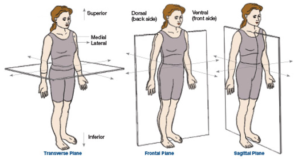
Runners tend to lack stability because we fail to work our muscles in multiple planes of motion. Muscles work in three different planes to accelerate, decelerate, and stabilize motion. These three planes are sagittal (forward/back), frontal (side/side), and transverse (rotational). If we only perform exercises  in the sagittal plane (sit, run, cycle, etc), the muscle fibers will start to lose their ability to operate in the other planes, thus causing instability.

Balance and stability are a complex interplay between having proper muscle strength and coordinating the muscles to do their job at the right time (timing of contractions). While there are many underlying physiological attributes to make this interplay successful, it is relatively simple to improve your balance.

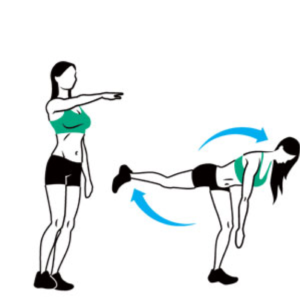
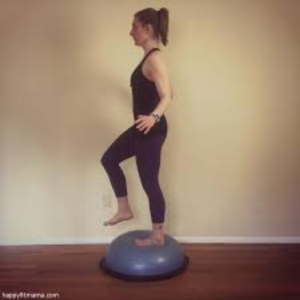
Let’s talk about what types of balance and stability exercises can help improve your running times.  In order to see performance improvements, incorporate balance drills into your workout routine three days a week. Begin with traditional static balance exercises such as standing on one leg for 30 seconds or performing 10 Romanian deadlifts on each leg. Then progress to performing the exercises on an unstable surface such as a foam pad or Bosu ball.Balance and Stability Training Can Improve Your Running Times, static balance exercises .                    Balance and Stability Training Can Improve Your Running Times, static balance exercises on unstable surface

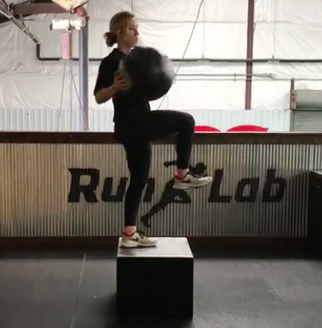
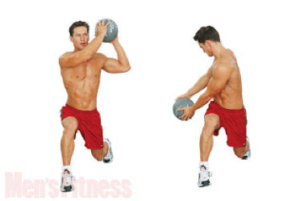
After you master these exercises, start performing dynamic single-leg exercises in a slow, controlled manner.  Try 10 step-ups with rotations and 10 lunges to knee with medicine ball chop.                               Balance and Stability Training Can Improve Your Running Times, dynamic single-leg exercises            Balance and Stability Training Can Improve Your Running Times, 10 lunges to knee with medicine ball chop

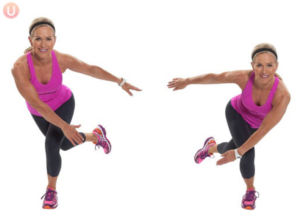
Once you feel comfortable and stable performing these exercises, progress to dynamic balance exercises such as speed skaters with a static five-second hold on each leg. Perform three, 30 second rounds

Balance and Stability Training Can Improve Your Running Times, speed skaters

These balance exercises are just the beginning. There are many variations and ways to keep challenging your body in the frontal plane. Start doing them regularly and you’ll be surprised at the benefits!!

Also, give that guy a hand next time you see him lying face-down in the dirt. Just sayin… 😉

Thank you for taking the time to read our RunLab™ Blog! We hope that you use this information to run more injury free and to optimize your running performance. 

For more information about the RunLab™ team and to get your running stride analyzed by one of the preeminent gait specialist teams in the country, please visit WWW.RUNLABAUSTIN.COM

Outside of the Austin area? You can still have your running stride analyzed by one of the best teams in the country. Just visit WWW.RUNLAB.US to see where our partner filming locations are based or choose the self-film option. 

RunLab™.  Helping runners help themselves.

ABOUT LORIN WILSON
RunLab™ Clinical Gait Specialist

Lucky enough to be a part of a great running program in high school, Lorin not only went on to win the 2007 Texas 4a State Championship in the mile but also went on to earn a track scholarship to the University of Texas at Austin. Lorin graduated from the The University of Texas at Austin with a major in Exercise Science and a minor in business. While still attending UT, he began coaching distance running at St. Stephen’s Episcopal school where he would coach student-athletes to break school records in the 400 meter, 800 meter, 1600 meter, 3200 meter, 5000 meter, 4×400 meters, and 4×800 meters. After graduating from UT and during his aforementioned tenure at St. Stephen’s, Lorin also worked for the local Austin non-profit Power For Parkinson’s as a fitness instructor, which provides free fitness programs for individuals with Parkinson’s disease. No longer a trainer at Power For Parkinson’s, Lorin does fundraising campaigns for Power For Parkinson’s. During this period he also started BlueSky Running LLC, which provided on-site Yoga programs for employees of the Austin Independent School District (teachers, administration, bus drivers etc).

Lorin has the following physical training certifications: National Academy of Sports Medicine (NASM) Certified Personal Trainer, Performance Enhancement Specialist (NASM), Corrective Exercise Specialist (NASM), Senior (elderly individuals) Fitness Specialist (NASM), Fitness Nutrition Specialist (NASM), RunLab Clinical Gait Specialist, USA Track & Field Level 1 Coach, and a USA Yoga Alliance 200 Hour Certified Yoga Instructor certification earned while studying in Rishikesh, India. Lorin is a MBA Graduate with an emphasis in Accounting from Texas State University. He was also the President of the Texas State MBA Student Association and a Future Texas Business Hall of Fame Scholarship Recipient.

Lorin has a marathon best of 2:37:05 (5:59 per mile pace) run at the 2011 Los Angeles Marathon. He ran his first 100 miler in 17 hours 30 minutes (10:15 per mile pace) in Flagstaff, Arizona in September 2018. He ran the 2019 Boston Marathon in 2:37:59. He also has three top 10 finishes (5th, 7th, and 10th) in the Capital 10,000, the largest 10k in Texas, with the latest two being 2016 and 2017. Lorin looks forward to working towards his goal of making high-quality fitness accessible to everyone while he continues to train for 100 mile races.

LEARN MORE:
RunLab™ Podcast RUN.
RunLab™ YouTube channel

Strength Training To Enhance Running Performance and Prevent Running Injuries

Integrating strength training to enhance running performance and prevent running injuries is important for all levels of runners.  At RunLab, it is not uncommon to hear from clients, “I can barely do a push-up.” “I never do strength training. I don’t want the bulk to slow me down.” 

Runners need more strength as a population. This is a universal truth, and yet runners almost seem to take pride in the lack of strength training they do. Somehow the idea that strength training is detrimental to one’s running performance has taken a space in the collective running consciousness. Often neglected by distance runners, strength is very important for injury prevention and performance optimization and is often neglected. Having adequate strength will lower the probability of injury by preparing muscles to accept increased demand during training cycles.

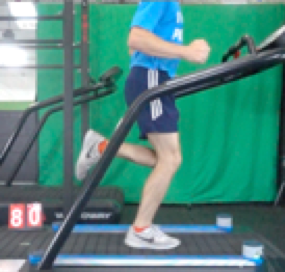
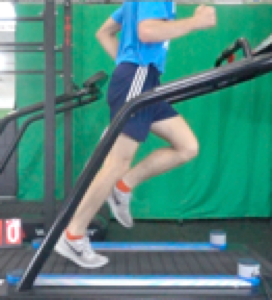
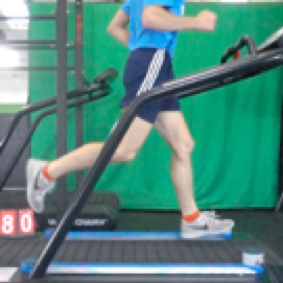
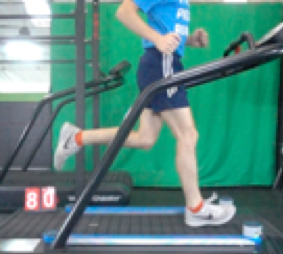
In order to understand the importance of strength in the context of gait, let’s take a quick look at each phase of the running gait cycle:

Contact Phase (Gait Cycle)
Midstance Phase (Gait Cycle)
Push-Off Phase (Gait Cycle)
Early Swing Phase (Gait Cycle)
Late Swing Phase (Gait Cycle)

If you look at the pictures, you can see that you are performing a series of single-leg squats and hops in rapid succession when you run. Due to the explosive nature of running, you are producing four to ten times your body weight in force PER STEP. It is vital to have sufficient strength to accept these loads if you hope to run injury-free. If you do not have ample strength in the primary working muscles, you will start to recruit smaller secondary muscles to perform the role of the primary muscles. Secondary muscles are not adequately equipped to do the job of a prime mover, either due to size or position in the body. Too much reliance on secondary muscles will result in a premature  break down and aberrant movement patterns programmed into your body over time.

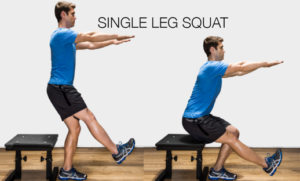
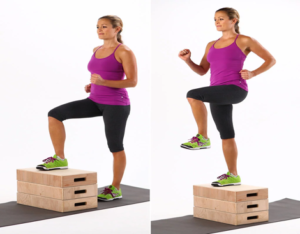
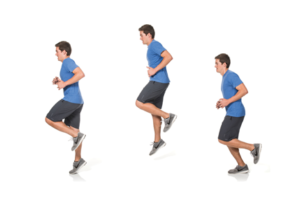
It is important to understand that strength comes in various forms. Functional strength is even more important than brute strength when it comes to a repetitive motion exercise like running. Being able to squat 2,000 pounds is an example of brute strength. However, this type of strength does not translate well to running. Functional strength is the ability to use your strength to perform your desired movement pattern under repetitive load. In order to be able to transfer strength to the desired movement pattern, one must be able to coordinate muscle firing patterns efficiently. Having functional strength will not only allow you to have more control over where the load is being produced while you are running, but also how efficiently the absorption load from the ground is transformed into propulsion energy. You gain functional running strength through performing exercises that look very similar to the running motion. Think of single leg squats, step-ups, or single leg plyometric exercises.

Strength Training To Enhance Running Performance and Prevent Running, single leg squatInjuries
Single Leg Squat
Strength Training To Enhance Running Performance and Prevent Running Injuries, Step-ups
Step-ups
Strength Training To Enhance Running Performance and Prevent Running Injuries, single leg plyometric
Single Leg Plyometric

One important point in regards to strength training is the concept of “bulking up”. With regards to bulking up, it is important to understand that strength has two major components. One component involves the nervous system’s ability to recruit motor units. Your brain is a major piece of hardware. From your brain, you have nerves that act as wires that conduct electrical signals to motor units that control muscle contractions. The more you perform an exercise, the thicker the myelin sheath, or the insulation surrounding the nerves, becomes. This makes the signal from your brain to your muscles more efficient. The more efficient your brain is at activating motor units, the more force production you are going to be able to generate and thus the stronger you are going to be. Nervous system adaptations happen rather quickly and the strength gains you experience within the first eight weeks of a strength and conditioning program will be neurological. 

The second major component of strength is the cross-sectional area of your muscle. You gain cross-sectional area, or hypertrophy  when you cause micro-trauma to muscle tissue through exercise. The stressed muscle repairs itself by having the myofibrils increase in thickness and number. Cross-sectional muscular gains take at least eight weeks of training. This is part of the reason to get your running gait re-analyzed every eight to twelve weeks. This gives an adequate amount of time for neurological and muscular strength adaptations to take place. 

A final word with regards to the idea that strength will “bulk you up and slow you down”. The main components contributing to muscle bulk are nutrition and the amount of testosterone in your body. You would have to work a muscle very hard, have the right amount of testosterone, and eat a specific diet to bulk up significantly. The amount of high intensity cardio most distance runners undergo keeps muscles lean, but we are often missing the strength to take full advantage of our high intensity workouts, which leads to injury and suboptimal performance.

Consider adding regular strength sessions into your weekly routine to help enhance running performance and prevent running injuries. Your body will thank you for it, and so will your mind when you hit that next PR because you didn’t break down half way through the race! 

Thank you for taking the time to read our RunLab™ Blog! We hope that you use this information to run more injury free and to optimize your running performance. 

For more information about the RunLab™ team and to get your running stride analyzed by one of the preeminent gait specialist teams in the country, please visit WWW.RUNLABAUSTIN.COM

Outside of the Austin area? You can still have your running stride analyzed by one of the best teams in the country. Just visit WWW.RUNLAB.US to see where our partner filming locations are based or choose the self-film option. 

RunLab™.  Helping runners help themselves.

ABOUT LORIN WILSON
RunLab™ Clinical Gait Specialist

Lucky enough to be a part of a great running program in high school, Lorin not only went on to win the 2007 Texas 4a State Championship in the mile but also went on to earn a track scholarship to the University of Texas at Austin. Lorin graduated from the The University of Texas at Austin with a major in Exercise Science and a minor in business. While still attending UT, he began coaching distance running at St. Stephen’s Episcopal school where he would coach student-athletes to break school records in the 400 meter, 800 meter, 1600 meter, 3200 meter, 5000 meter, 4×400 meters, and 4×800 meters. After graduating from UT and during his aforementioned tenure at St. Stephen’s, Lorin also worked for the local Austin non-profit Power For Parkinson’s as a fitness instructor, which provides free fitness programs for individuals with Parkinson’s disease. No longer a trainer at Power For Parkinson’s, Lorin does fundraising campaigns for Power For Parkinson’s. During this period he also started BlueSky Running LLC, which provided on-site Yoga programs for employees of the Austin Independent School District (teachers, administration, bus drivers etc).

Lorin has the following physical training certifications: National Academy of Sports Medicine (NASM) Certified Personal Trainer, Performance Enhancement Specialist (NASM), Corrective Exercise Specialist (NASM), Senior (elderly individuals) Fitness Specialist (NASM), Fitness Nutrition Specialist (NASM), RunLab Clinical Gait Specialist, USA Track & Field Level 1 Coach, and a USA Yoga Alliance 200 Hour Certified Yoga Instructor certification earned while studying in Rishikesh, India. Lorin is a MBA Graduate with an emphasis in Accounting from Texas State University. He was also the President of the Texas State MBA Student Association and a Future Texas Business Hall of Fame Scholarship Recipient.

Lorin has a marathon best of 2:37:05 (5:59 per mile pace) run at the 2011 Los Angeles Marathon. He ran his first 100 miler in 17 hours 30 minutes (10:15 per mile pace) in Flagstaff, Arizona in September 2018. He ran the 2019 Boston Marathon in 2:37:59. He also has three top 10 finishes (5th, 7th, and 10th) in the Capital 10,000, the largest 10k in Texas, with the latest two being 2016 and 2017. Lorin looks forward to working towards his goal of making high-quality fitness accessible to everyone while he continues to train for 100 mile races.

LEARN MORE:
RunLab™ Podcast RUN.
RunLab™ YouTube channel
How Flexible Do You Need To Be To Run Efficiently?

How Flexible Do You Need To Be To Run Efficiently?
Will this help me run faster?

How flexible do you need to be to run efficiently?  Is being more flexible better for injury prevention, or worse?  Should I be able to touch my toes?  Should I be bending myself up at Yoga classes like a pretzel?  Should I even stretch at all?!?

We are not likely to put an end to the stretching debate any time soon, but after evaluating and treating thousands of runners, from Olympic gold medalists to athletes with Down syndrome over the last 15 years, we can tell you that the answer to whether or not YOU should stretch is a definitive……maybe.

While there is no hard and fast absolute when it comes to flexibility, there are some big-picture concepts that are important to understand. At RunLab, we have seen hypermobile (excessively flexible) runners that are able to run injury-free, and we have also seen runners who are so stiff they can barely perform basic motor skills with true proficiency run injury free (ever met someone who can’t touch their mid shins?  Yeah, that stiff). So, how flexible do you need to be to run efficiently?  It’s a broad spectrum. Every physiological attribute exists on a spectrum, and university-based researchers have established what are considered “normal limits”. Because of this spectrum, this definition of “normal” is the middle 80%.  

First and foremost, it is important to define our terms. Flexibility and mobility are different but related. Flexibility is a component of mobility but the two terms are not interchangeable. Flexibility is the ability of a muscle to change its length passively. Mobility is the ability to move freely without restriction. 

Running is a dynamic motion. In dynamic motion, a muscle shortens and lengthens as it contracts. This happens over and over again during a repetitive motion activity like running. When considering the stability aspect involved with running, it becomes apparent that flexibility is not the most important factor.

Rather, mobility is the attribute runners should be more concerned with. It is important that a joint can move, unrestricted, through normal range-of-motion, but and increase in flexibility beyond what is needed to achieve that range-of-motion at the joint level is not improving the stability of the joint and could actually be creating a less stable environment for loading and can create a power leakage in the movement pattern. 

In runners we typically look at four major areas to assess mobility.  The ankles, knees,  hips, and spine.  Having proper mobility in each of these areas is important in order to properly accept load from the ground as the body comes out of flight phase and begins to absorb shock from the foot, and then ultimately up the kinetic chain.  Inefficiency in shock absorption means a higher probability of injury as non-primary movers may then be recruited to absorb load, stabilize joints, and produce propulsion because the primary movers are not able to adequately perform their role. 

How Flexible Do You Need To Be To Run Efficiently?
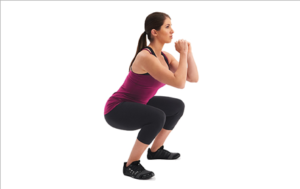
Squat

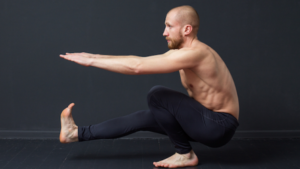
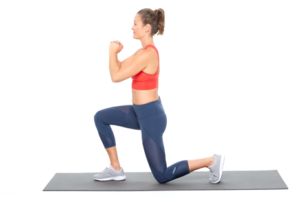
Three important functional movements that help build both mobility and stability for running are the deep-squat, the pistol squat, and the inline lunge.  It is important to perform all of these movements with proper form and to really pay attention to your body as you go slowly through the entire motion. 

How Flexible Do You Need To Be To Run Efficiently?
Pistol Squat

Moving slowly and deliberately will help you avoid compensatory movements that tend to easily sneak in to these movement pattern.  The body tends to want to offload stress from weak or immobile areas during loading and it is easy to continue to strengthen muscles that are already strong, further increasing the disparity between strong and weak muscle groups.

How Flexible Do You Need To Be To Run Efficiently?
Lunge

The ability to master these movements at a slow speed without added load is the first step to improving both mobility and stability around joints.  Adding complexity (speed, reps, weight) to the fundamental movement patterns will lower the probability of injury while running at greater speeds or distance, but should only be done once the basic building blocks are in place. 

Test the fundamental movements slowly on yourself.  If you feel restrictions or imbalances before reaching end-range in a controlled way, perform a few foam rolling drills and then retest.  Perform these types of patterns regularly as both a warm up and cool down during running workouts.  After a few weeks you will see improved mobility and stability around your hips, knees, and ankles, which over time will translate to more efficient motor patterns and increased running efficiency.

Thank you for taking the time to read our RunLab™ Blog!  We hope that you use this information to optimize your running performance and decrease propensity for injury so you can run happy and healthy into your golden years. 

For more information about the RunLab™ team and to get your running stride analyzed by one of the preeminent gait specialist teams in the country, please visit WWW.RUNLABAUSTIN.COMThank you for taking the time to read our RunLab™ Blog! We hope that you use this information to run more injury free and to optimize your running performance. 

Outside of the Austin area? You can still have your running stride analyzed by one of the best teams in the country. Just visit WWW.RUNLAB.US to see where our partner filming locations are based or choose the self-film option. 

RunLab™.  Helping runners help themselves.

ABOUT LORIN WILSON
RunLab™ Clinical Gait Specialist

Lucky enough to be a part of a great running program in high school, Lorin not only went on to win the 2007 Texas 4a State Championship in the mile but also went on to earn a track scholarship to the University of Texas at Austin. Lorin graduated from the The University of Texas at Austin with a major in Exercise Science and a minor in business. While still attending UT, he began coaching distance running at St. Stephen’s Episcopal school where he would coach student-athletes to break school records in the 400 meter, 800 meter, 1600 meter, 3200 meter, 5000 meter, 4×400 meters, and 4×800 meters.

After graduating from UT and during his aforementioned tenure at St. Stephen’s, Lorin also worked for the local Austin non-profit Power For Parkinson’s as a fitness instructor, which provides free fitness programs for individuals with Parkinson’s disease. No longer a trainer at Power For Parkinson’s, Lorin does fundraising campaigns for Power For Parkinson’s. During this period he also started BlueSky Running LLC, which provided on-site Yoga programs for employees of the Austin Independent School District (teachers, administration, bus drivers etc).

Lorin has the following physical training certifications: National Academy of Sports Medicine (NASM) Certified Personal Trainer, Performance Enhancement Specialist (NASM), Corrective Exercise Specialist (NASM), Senior (elderly individuals) Fitness Specialist (NASM), Fitness Nutrition Specialist (NASM), RunLab Clinical Gait Specialist, USA Track & Field Level 1 Coach, and a USA Yoga Alliance 200 Hour Certified Yoga Instructor certification earned while studying in Rishikesh, India. Lorin is a MBA Graduate with an emphasis in Accounting from Texas State University. He was also the President of the Texas State MBA Student Association and a Future Texas Business Hall of Fame Scholarship Recipient.

Lorin has a marathon best of 2:37:05 (5:59 per mile pace) run at the 2011 Los Angeles Marathon. He ran his first 100 miler in 17 hours 30 minutes (10:15 per mile pace) in Flagstaff, Arizona in September 2018. He ran the 2019 Boston Marathon in 2:37:59. He also has three top 10 finishes (5th, 7th, and 10th) in the Capital 10,000, the largest 10k in Texas, with the latest two being 2016 and 2017. Lorin looks forward to working towards his goal of making high-quality fitness accessible to everyone while he continues to train for 100 mile races.

LEARN MORE:
RunLab™ Podcast RUN.
RunLab™ YouTube channel